About 240 minutes
Poetical Works of Robert Bridges, Volume 5 — Key Ideas to Explore
Adventure Picaresque Fiction
55,163 recorded words. 21 minutes difference from this book's estimate.
View Gutenberg source #56406
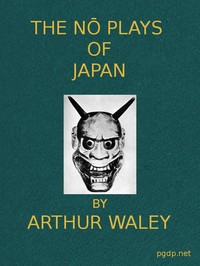
For The Nō Plays of Japan — Context and Discussion, the stored edition analysis reports 59,879 words, 4 hr 21 min estimated reading time, and 14 detected text sections.
The text analysis averages about 14.1 words per sentence, while the detected sections provide another way to judge how the source is divided.
Project Gutenberg metadata also associates the work with “No plays -- Translations into English,” connecting these edition facts with the source record’s subject description.
Explore this collection
These alternatives are selected using recorded categories and estimated reading time.
About 240 minutes
Adventure Picaresque Fiction
55,163 recorded words. 21 minutes difference from this book's estimate.
View Gutenberg source #56406About 228 minutes
Adventure Picaresque Fiction
52,415 recorded words. 33 minutes difference from this book's estimate.
View Gutenberg source #14588About 213 minutes
Adventure Picaresque Fiction
48,821 recorded words. 48 minutes difference from this book's estimate.
View Gutenberg source #55294Search stored excerpts and compare books → Choose by your preferences →
Choices use stored catalog measurements. Estimates vary with reading speed. A shared category is a catalog label, not a claim that two books have the same argument or literary quality.
Search reads excerpt text stored with this catalog and links to its associated Gutenberg record. The connection is stored in the site database; this tool does not recheck that every excerpt is word-for-word identical to that external record. Excerpt search does not cover every chapter and does not verify historical publication dates.
Catalog snapshot checked: 2026-09-26. Coverage: 90 public books, 90 available source excerpts.
Calculated from edition completeness, EPUB availability, text structure and catalogue metadata. Not a user rating.
Total of 100 points, scaled to a 2.5-5.0 range. Editions with an empty description or a missing EPUB file are not scored.
Public-domain source text
The source text is kept in the dedicated reader, separate from this catalogue record and its commentary.
Arthur Waley's translations of Nō plays, first published in 1922, present a selection of works that blend lyrical poetry, dramatic dialogue, and choral passages. The excerpts reveal a distinctive structure: a waki (secondary character) often begins with a travel song, setting a scene of pilgrimage or journey, before encountering a mysterious figure—frequently a ghost or deity—who recounts a tale. Waley's English renders the spare, evocative quality of the original Japanese, as when a traveller in Kantan describes being 'Deep hid behind the alleys of the sky.' The plays rely on suggestion rather than action, with pivotal moments occurring in dreams or memories.
In several of the translated plays, the action begins with a waki—a travelling priest or wanderer—who announces his journey in a Song of Travel. In Kantan, the protagonist Rosei declares he has 'drifted from dusk to dawn and dawn to dusk,' seeking a sage to guide his life. This opening establishes a mood of spiritual seeking and sets the stage for the encounter that follows. The waki often arrives at a specific location—a village, a temple, a bridge—where he meets a local inhabitant who proves to be more than he seems. Waley's translations preserve the formulaic yet poetic quality of these openings, which serve to ground the supernatural events in a recognizable, earthly setting.
The excerpt from Kantan centres on a magical pillow that grants the sleeper a vision of his future. Rosei, after laying his head on the 'Pillow of Kantan,' is visited by an envoy who declares him emperor. The ensuing choral passage describes a lavish palace, 'a courtyard strewn with golden and silver sand,' and a procession of vassal-kings. Yet the entire vision is framed as a momentary dream—the hostess is still heating millet. This device recurs in Nō: pivotal events are often revealed as illusions, memories, or supernatural visitations. Waley's translation captures the swift transition from mundane lodging to imperial splendour, then back again, emphasizing the plays' preoccupation with the fleeting nature of worldly glory.
Waley's translations frequently shift between individual speech and collective choral passages, marked as 'CHORUS' in the text. In Kantan, the chorus takes over Rosei's narration, describing the vision in heightened, imagistic language: 'The light wells and wells like a rising tide.' This interplay between solo and ensemble voices is a hallmark of Nō, allowing for shifts in perspective and emotional intensity. The chorus often comments on the action or amplifies a character's inner state. Waley's rendering preserves the rhythmic, incantatory quality of these passages, which function almost like musical interludes within the dramatic structure.
The excerpts include minimal but telling stage directions: 'Knocking,' 'While ROSEI is still chanting these words, the ENVOY enters,' 'ROSEI, who has been lying with his fan over his face, rises.' These details, along with the key to the stage plan in the front matter, indicate that Waley intended his translations to be read with an awareness of performance. The hashigakari (bridge), the shite's pillar, and the musicians' positions are all noted. Readers unfamiliar with Nō conventions can infer from these clues that the plays are highly stylized, with symbolic props (the fan, the pillow) and deliberate pacing. Waley's notes and introduction further contextualize the religious and literary background, but the excerpts themselves demonstrate how the text encodes theatrical practice.
Waley's translations reward a reader who attends to the interplay of voices—the waki's plain speech, the shite's lyrical revelations, the chorus's poetic commentary. The plays often hinge on a single, charged encounter or a dream-vision, and the language shifts accordingly between conversational and elevated. A first-time reader may find it helpful to read each play twice: once for the narrative, and again to appreciate the choral passages and stage directions that give Nō its distinctive texture.
Years shelving those Nō plays, I noticed how Waley’s stage directions let ghosts drift through pine shadows, unhurried as memory. It put me in mind of old Belasco’s theatrical memoirs, where even the gaslight feels deliberate, almost reverent. There’s a kinship there—both understand that silence on a page can hold more than any shout. The Life of David Belasco; Vol. 1 — Context and Discussion rests beside them now, patient as a folded fan.
Save your reaction, strongest insight, and memorable passage.