About 82 minutes
The cinnamon heart — A Reader’s Guide
Adventure Picaresque Fiction
18,733 recorded words. 4 minutes difference from this book's estimate.
View Gutenberg source #74002
This digital edition of Percy: A Tragedy — Context and Discussion is described by source-level measurements including 17,794 words, 1 hr 18 min estimated reading time, and 3 detected text sections.
The text analysis averages about 14.5 words per sentence, while the detected sections provide another way to judge how the source is divided.
Project Gutenberg metadata also associates the work with “Tragedies (Drama),” connecting these edition facts with the source record’s subject description.
Explore this collection
These alternatives are selected using recorded categories and estimated reading time.
About 82 minutes
Adventure Picaresque Fiction
18,733 recorded words. 4 minutes difference from this book's estimate.
View Gutenberg source #74002About 84 minutes
Adventure Picaresque Fiction
19,146 recorded words. 6 minutes difference from this book's estimate.
View Gutenberg source #20172About 72 minutes
Adventure Picaresque Fiction
16,515 recorded words. 6 minutes difference from this book's estimate.
View Gutenberg source #31044Search stored excerpts and compare books → Choose by your preferences →
Choices use stored catalog measurements. Estimates vary with reading speed. A shared category is a catalog label, not a claim that two books have the same argument or literary quality.
Search reads excerpt text stored with this catalog and links to its associated Gutenberg record. The connection is stored in the site database; this tool does not recheck that every excerpt is word-for-word identical to that external record. Excerpt search does not cover every chapter and does not verify historical publication dates.
Catalog snapshot checked: 2026-09-26. Coverage: 90 public books, 90 available source excerpts.
Calculated from edition completeness, EPUB availability, text structure and catalogue metadata. Not a user rating.
Total of 100 points, scaled to a 2.5-5.0 range. Editions with an empty description or a missing EPUB file are not scored.
Public-domain source text
The source text is kept in the dedicated reader, separate from this catalogue record and its commentary.
From its first scene, Percy: A Tragedy establishes a rhythm of anxious hesitation and sudden confrontation. The play opens not with action but with Edric and Birtha speculating about Earl Douglas's troubled behavior: he 'starts, looks wild, then drops ambiguous hints, / Frowns, hesitates, turns pale, and says 'twas nothing.' This pattern of suppressed emotion and abrupt revelation recurs throughout the drama, shaping both the dialogue and the pacing. The language itself mirrors the characters' inner turmoil—short, broken lines and exclamations give way to longer, more measured speeches when characters attempt to assert control. The result is a work that feels perpetually on the verge of eruption, where every calm moment is undercut by the threat of violence or confession.
The exchanges between Elwina and Percy in Act II reveal how More uses dialogue to dramatize internal conflict. When Percy bursts in, Elwina's commands are sharp and immediate: 'Percy, I charge thee, leave me.' He counters with equal force: 'Tyrant, no.' The scene oscillates between pleading and defiance, with each character trying to gain the upper hand through rhetoric. Elwina appeals to honour and duty, while Percy invokes love and suffering. Their speeches are laced with interruptions and dashes, creating a staccato effect that conveys emotional urgency. Notably, when Elwina weeps, Percy's response shifts from accusation to envy: 'thou hast still the liberty to weep.' This moment of shared vulnerability is quickly closed off as Elwina reasserts her resolve. The dialogue thus becomes a series of tactical moves, with each character testing the other's emotional defences.
More builds tension through what is left unsaid. Early in the play, Birtha observes that Douglas 'drops ambiguous hints' and then denies their significance. This technique recurs: characters frequently allude to past events or hidden knowledge without fully disclosing them. Elwina's grief is attributed to 'some dark mystery,' and her father's absence is mentioned but not explained. The most striking instance is the missing letter—Percy claims he sent one by Harcourt, but Elwina never received it. This plot device, introduced almost casually, heightens the sense of miscommunication and fate. The audience is left to infer that Douglas may have intercepted it, but the text does not confirm this. By withholding information, More keeps the narrative momentum driven by suspicion and incomplete understanding, forcing readers to piece together motives from fragmented clues.
The play's structure alternates between quiet, reflective passages and explosive confrontations. The opening scene is largely expository, with Birtha and Edric speaking in measured couplets. But once Percy enters, the pace accelerates: lines become shorter, exclamations multiply, and stage directions indicate physical restraint ('she attempts to go, he seizes her hand'). This pattern repeats across acts. In the excerpt, Elwina's plea for Percy to leave is followed by a sudden shift when she learns of the missing letter, prompting a new wave of anxiety. More also uses soliloquy-like speeches to slow the pace, allowing characters to articulate their inner states. For instance, Elwina's reflection on her tears—'drops of shame which wash the cheek of guilt'—pauses the action for a moment of self-analysis. These rhythmic changes prevent the drama from becoming monotonous, keeping the audience engaged through contrast.
Readers approaching Percy should attend to the way More manipulates tempo and dialogue to create a sense of impending crisis. The play rewards careful attention to what characters do not say as much as what they do. Because the excerpts are limited to the first two acts, the full resolution of the love triangle and the fate of the missing letter remain unknown. However, the patterns established early—the oscillation between restraint and outburst, the reliance on ambiguous hints—suggest a tragedy driven by miscommunication and emotional extremity rather than external action.
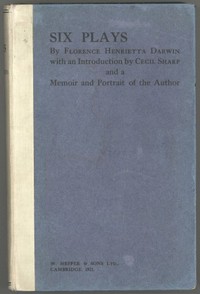
That rainy afternoon, Hannah More’s Percy kept me company, its characters vibrating with a strained, theatrical intensity that felt almost modern. I closed it, restless, and my hand drifted to another spine. There, the same urgent voices seemed to breathe again, quieter. Six Plays — Text and Context holds that same curious warmth, and I lost the rest of the grey day inside it.
Your answers remain private and are stored only in this browser.