About 523 minutes
Charles Frohman: Manager and Man — Edition Insights
Science Fiction Utopias
120,216 recorded words. 9 minutes difference from this book's estimate.
View Gutenberg source #26146
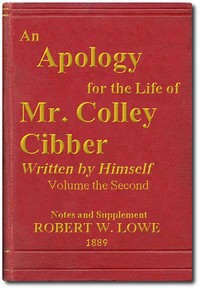
Before opening An Apology for the Life of Mr. Colley Cibber, Volume 2 (of 2) Written by Himself. A New Edition with Notes and Supplement — Reading Companion, the edition data offers a quick orientation: 118,214 words, 8 hr 34 min estimated reading time, and 15 detected text sections.
The text analysis averages about 19.0 words per sentence, while the detected sections provide another way to judge how the source is divided.
Project Gutenberg metadata also associates the work with “Theater -- Great Britain -- History -- 18th century,” connecting these edition facts with the source record’s subject description.
Explore this collection
These alternatives are selected using recorded categories and estimated reading time.
About 523 minutes
Science Fiction Utopias
120,216 recorded words. 9 minutes difference from this book's estimate.
View Gutenberg source #26146About 485 minutes
Science Fiction Utopias
111,376 recorded words. 29 minutes difference from this book's estimate.
View Gutenberg source #9848About 468 minutes
Science Fiction Utopias
107,600 recorded words. 46 minutes difference from this book's estimate.
View Gutenberg source #47117Search stored excerpts and compare books → Choose by your preferences →
Choices use stored catalog measurements. Estimates vary with reading speed. A shared category is a catalog label, not a claim that two books have the same argument or literary quality.
Search reads excerpt text stored with this catalog and links to its associated Gutenberg record. The connection is stored in the site database; this tool does not recheck that every excerpt is word-for-word identical to that external record. Excerpt search does not cover every chapter and does not verify historical publication dates.
Catalog snapshot checked: 2026-09-26. Coverage: 90 public books, 90 available source excerpts.
Calculated from edition completeness, EPUB availability, text structure and catalogue metadata. Not a user rating.
Total of 100 points, scaled to a 2.5-5.0 range. Editions with an empty description or a missing EPUB file are not scored.
Public-domain source text
The source text is kept in the dedicated reader, separate from this catalogue record and its commentary.
The second volume of Colley Cibber's Apology opens with the Haymarket actors recruited by subscription, a practical arrangement that Cibber describes with a mixture of pride and complaint. His narrative voice remains consistent: self-justifying, anecdotal, and keenly aware of the financial realities behind theatrical glamour. The volume covers the rebuilding of Lincoln's Inn Fields theatre, the rise of opera as a separate entertainment, and Cibber's legal battles over patent rights. Throughout, he moves between specific backstage incidents and broader reflections on the stage's moral and commercial standing.
Cibber devotes considerable space to the economics of playhouse management. He recounts how actors were recruited by subscription for the Haymarket, a scheme that required patrons to pledge money in advance. The tone is pragmatic: Cibber notes the difficulty of keeping a company together when salaries were uncertain and rival houses poached talent. He also describes the rebuilding of Lincoln's Inn Fields theatre after the previous house was lost, emphasizing the cost and risk involved. These passages reveal a manager who thought constantly about balance sheets, yet wrote about them with a theatrical flourish—turning ledger entries into dramatic anecdotes.
In Chapter XII, Cibber offers a short view of the opera when it first separated from comedy. He treats this division as both a commercial and aesthetic shift, noting that opera attracted a different, wealthier audience while spoken drama struggled to maintain its following. Cibber's observations are grounded in specific details: the cost of singers, the novelty of Italian styles, and the way opera houses altered the social geography of London entertainment. He does not hide his ambivalence—praising the spectacle while questioning its long-term effect on English theatre.
A significant portion of the volume deals with Cibber's legal troubles. He steps out of his way to plead his theatrical cause in Chancery, framing the lawsuit as a battle over the patent rights that governed London's playhouses. The narrative becomes a mix of personal grievance and legal argument, with Cibber presenting himself as a defender of theatrical order against encroaching rivals. The language is precise about dates and documents, yet the tone remains that of a performer who cannot resist dramatizing his own case. The supplementary chapter and notes by Robert W. Lowe add further context to these disputes.
This edition is notable for its twenty-six mezzotint portraits by R. B. Parkes and eighteen etchings by Adolphe Lalauze. The frontispiece shows Cibber as Lord Foppington, the character he made famous in Vanbrugh's The Relapse. Other portraits depict actors such as Anne Oldfield, Robert Wilks, and Theophilus Cibber. These images do not merely illustrate the text; they form a parallel narrative of theatrical celebrity. The list of plates functions as a visual index of the people Cibber discusses, grounding his anecdotes in recognizable faces and costumes.
Readers approaching this volume should attend to the interplay between Cibber's personal story and the editorial apparatus that surrounds it. The notes and supplement by Robert W. Lowe provide historical context without overwhelming the original voice. Cibber's Apology is best read as a document of theatrical life rather than a straightforward autobiography—its value lies in the details of management, rivalry, and performance that Cibber, despite his self-serving tone, records with unusual precision.
Reading Cibber’s second volume, I kept thinking about the weary, half-lit world behind the curtain—how much a playwright’s life hinged on luck and the mood of the pit. There’s a similar shadow in The Profligate: A Play in Four Acts — Edition Insights, that quiet sense of a moral ledger being settled. Old plays feel like letters from a familiar stranger—warm, dated, and somehow still ours.
Use these questions to collect your thoughts before moving on.