About 114 minutes
Shakespeare and His Love: A Play in Four Acts and an Epilogue — Background and Themes
Science Fiction Utopias
26,143 recorded words. 1 minutes difference from this book's estimate.
View Gutenberg source #69269
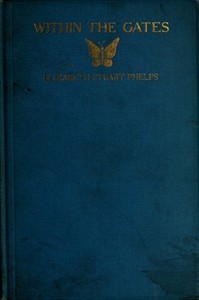
Before opening Within the Gates — Context and Discussion, the edition data offers a quick orientation: 25,980 words, 1 hr 53 min estimated reading time, and 4 detected text sections.
The text analysis averages about 9.3 words per sentence, while the detected sections provide another way to judge how the source is divided.
Project Gutenberg metadata also associates the work with “Married people -- Drama,” connecting these edition facts with the source record’s subject description.
Explore this collection
These alternatives are selected using recorded categories and estimated reading time.
About 114 minutes
Science Fiction Utopias
26,143 recorded words. 1 minutes difference from this book's estimate.
View Gutenberg source #69269About 116 minutes
Science Fiction Utopias
26,667 recorded words. 3 minutes difference from this book's estimate.
View Gutenberg source #34383About 117 minutes
Science Fiction Utopias
26,859 recorded words. 4 minutes difference from this book's estimate.
View Gutenberg source #49778Search stored excerpts and compare books → Choose by your preferences →
Choices use stored catalog measurements. Estimates vary with reading speed. A shared category is a catalog label, not a claim that two books have the same argument or literary quality.
Search reads excerpt text stored with this catalog and links to its associated Gutenberg record. The connection is stored in the site database; this tool does not recheck that every excerpt is word-for-word identical to that external record. Excerpt search does not cover every chapter and does not verify historical publication dates.
Catalog snapshot checked: 2026-09-26. Coverage: 90 public books, 90 available source excerpts.
Calculated from edition completeness, EPUB availability, text structure and catalogue metadata. Not a user rating.
Total of 100 points, scaled to a 2.5-5.0 range. Editions with an empty description or a missing EPUB file are not scored.
Public-domain source text
The source text is kept in the dedicated reader, separate from this catalogue record and its commentary.
Elizabeth Stuart Phelps's Within the Gates (1901) is a dramatic departure from her earlier novel The Gates Between, as she notes in a prefatory remark. The play opens in a city library furnished in red leather and dark wood, where Helen Thorne sits in a cream-white tea-gown, restlessly sewing a little boy's lace collar. This domestic scene quickly gives way to a metaphysical journey: Dr. Esmerald Thorne, a city physician, dies and awakens in a spirit realm where he is a stranger. The stage directions emphasize material details—the indeterminate carpet, the crimson curtains—while the dialogue shifts to abstract questions about happiness, possession, and the nature of the afterlife.
Phelps crafts Dr. Thorne's speech to reflect his professional identity and spiritual dislocation. When he first meets the spirit of William Harvey, he exclaims, "The great Harvey? And you discovered the circulation of the blood? How wonderful!"—a line that reveals both his reverence for scientific achievement and his limited frame of reference. Harvey responds wearily, "I did not think to find your education so limited," contrasting earthly knowledge with spiritual understanding. Thorne's language remains clinical: he insists "I am perfectly well" even as Harvey diagnoses him as "sick of soul." The physician's vocabulary—"therapeutics," "surgery," "case"—persists into the afterlife, marking his inability to shed his earthly identity.
The opening stage directions are unusually detailed for a drama of this period. The library is "littered a little with the signs of feminine occupation," and the lamps are "shaded with lace of red or of white." These colors—crimson, cream-white, red—recur throughout the scene, creating a visual motif that links the earthly home to the spirit world. The indeterminate carpet and heavy curtains suggest a domestic space that is both specific and generic, grounding the supernatural events in recognizable materiality. Later, the spirit realm is described only through costume and gesture: Harvey wears "a cloak of the tint of the dead oak-leaf" clasped with a golden cross, and speaks with "a fine and courtly manner, dating from a bygone age." Phelps uses these visual cues to signal the timelessness of the afterlife.
The exchange between Thorne and Harvey functions as a Socratic dialogue on the nature of happiness and spiritual health. Thorne lists his earthly possessions—"Love, happiness, home, health, prosperity, fame, wealth, ambition"—and declares he has lost them all. Harvey's reply, "Was there by chance nothing else?" forces Thorne to acknowledge "a little incidental usefulness." This moment of understatement is key: Thorne's medical work, which he dismisses, becomes his only bridge to the spirit world. The woman-spirit who recognizes him as "Doctor! Doctor Thorne!" confirms Harvey's diagnosis that this "incidental usefulness" is a "good symptom." Phelps uses the dialogue to dramatize a theological argument about the value of service over material success.
Phelps imagines the afterlife as a "pure theocracy," a political system Thorne admits he "never studied." This detail underscores his earthly preoccupation with science and democracy. Harvey's explanation that he was "commanded" to speak to Thorne introduces a hierarchy of obedience that Thorne, a "sovereign citizen of America," finds alien. The play's subtitle—"A Drama"—and its three-act structure suggest a theatrical exploration of spiritual transformation, but the excerpts leave unclear whether Thorne achieves harmony. The presence of the Angel Azrael in the dramatis personae hints at a more orthodox religious framework, while Harvey's wistful interest in "the latest attainments in science on the planet Earth" adds a poignant note of intellectual longing.
Readers approaching Within the Gates should attend to Phelps's use of dramatic irony: Thorne's medical expertise, which he values above all, is precisely what the spirit world treats as incidental. The play rewards attention to its stage directions, which encode thematic contrasts between earthly and spiritual values. Because the excerpts cover only the first act, the resolution of Thorne's nostalgia and his relationship with his wife Helen remain open questions. The work stands as a curious hybrid of domestic drama and theological allegory, best appreciated for its linguistic precision and its willingness to let a skeptical protagonist struggle with faith.
That play about Dr. Thorne stayed with me—that quiet ache of a man who’d healed everyone but himself. It reminded me of how A motley jest — Inside the Classic lingers too, not for its plot, but for that same tender question: what we carry inward when everything outward has been stripped away. I keep thinking about both.
Create a short personal record of your experience with this book.