
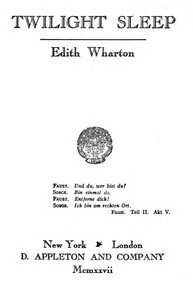
Twilight sleep by Edith Wharton
Edith Wharton's Twilight Sleep drops us into the glittering, frantic world of 1920s New York high society. But forget the champagne-fueled parties you might expect. Wharton is interested in what happens after the guests leave.
The Story
The story orbits around Pauline Manford, a woman who runs her life and her family like a corporate efficiency expert. Her calendar is a mosaic of appointments with gurus, lectures on new thought, and treatments designed to achieve perfect peace—what she calls 'Twilight Sleep.' This mania for self-improvement is her way of dodging any real emotion or conflict. Her husband, Dexter, is quietly miserable in his law practice. Her daughter, Nona, watches it all with clear-eyed horror, while her son, Jim, gets into serious trouble. The tension explodes when figures from the family's complicated past reappear, threatening to shatter the carefully maintained illusion of harmony. The plot isn't about a single big event, but about the slow, inevitable crack-up of a system built on avoidance.
Why You Should Read It
What stunned me is how modern this feels. Pauline isn't just a silly socialite; she's the 1920s version of someone addicted to wellness podcasts and life-hacks, using busyness as a shield. Wharton's genius is in showing how this 'personal peace' project makes Pauline a terrible mother and wife. She's so busy managing her serenity that she's blind to the actual people around her. Nona, the observant daughter, is the book's heart. Her frustration and love for her chaotic family is something anyone can relate to. Wharton writes with a dry, wicked wit that makes the satire bite, but there's a deep sadness here too—a portrait of people so afraid of pain they make themselves numb.
Final Verdict
This is a perfect pick for readers who love character-driven stories about family dysfunction. If you enjoyed The Great Gatsby but wanted more focus on the dark secrets inside the mansions, this is for you. It's also a great, lesser-known entry point into Wharton's work. You don't need to be a history buff; you just need to have ever scrolled through social media and wondered if everyone's perfect life was just a performance. Twilight Sleep proves that the anxiety of keeping up appearances is a tale as old as time—or at least as old as the 1920s.
There are no legal restrictions on this material. Knowledge should be free and accessible.
James Davis
2 years agoWhile browsing through various academic sources, the insights into future trends are particularly thought-provoking. A refreshing and intellectually stimulating read.
Paul Moore
4 months agoMy first impression was quite positive because the author clearly has a deep mastery of the subject matter. This should be on the reading list of every serious professional.
Karen Martin
9 months agoComparing this to other titles in the same genre, the step-by-step breakdown of the methodology is extremely helpful for students. I'll be recommending this to my students and colleagues alike.
Margaret Davis
11 months agoUnlike many other resources I've purchased before, the evidence-based approach makes it a very credible source of information. A rare gem in a sea of mediocre content.







Paul Lee
1 year agoBefore I started my latest project, I read this and the objective evaluation of the pros and cons is very refreshing. Well worth the time invested in reading it.