
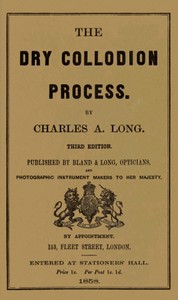
The Dry Collodion Process by Charles A. Long
Let's be clear from the start: this isn't a novel. 'The Dry Collodion Process' is a technical manual from 1861. But if you think that means it's dry or boring, you'd be missing a hidden narrative. Charles A. Long wrote this during photography's wild west era, a time of frantic experimentation.
The Story
The 'plot' is Long's passionate case for his method. The wet collodion process, the dominant technique, was a huge pain. It required photographers to coat, expose, and develop glass plates all within about ten minutes, before the chemical coating dried. This meant hauling a portable darkroom everywhere. Long's 'dry' method proposed a prepared plate that could be exposed and developed later, anywhere. He lays out his formulas and procedures with meticulous detail, arguing for its superiority in consistency, portability, and ease. The conflict is silent but present on every page: his clear, logical instructions versus the entrenched, messy standard practice of the day.
Why You Should Read It
What grabbed me was the voice. Long isn't a distant academic; he's a practical man solving a problem. You can feel his frustration with the status quo and his pride in his solution. Reading his careful steps, you see the mind of an innovator. It makes you root for him. The book becomes a character study in persistence. You also get an incredible, ground-level view of how art and science crashed together in the 1800s. This is the real, gritty work behind those stunning historical photos. It turns abstract history into something tangible you can almost smell (trust me, the chemical descriptions are vivid).
Final Verdict
This is a niche book, but a rewarding one. It's perfect for history buffs, photography enthusiasts, or anyone fascinated by forgotten ideas. It's not a casual beach read, but for the right person, it's utterly captivating. Think of it as a primary source detective story. You're holding the evidence of a might-have-been, written by the man who believed in it most. If you've ever wondered about the 'how' behind old photographs, or just love an underdog tale told through chemistry and glass plates, give Long a few hours of your time. He deserves to be heard.
Legal analysis indicates this work is in the public domain. You can copy, modify, and distribute it freely.
Linda Thompson
5 months agoIf you enjoy this genre, the depth of research presented here is truly commendable. Worth every second.
Jessica Moore
11 months agoAfter finishing this book, the depth of research presented here is truly commendable. Truly inspiring.
Kevin Jones
2 years agoFrom the very first page, the emotional weight of the story is balanced perfectly. Exceeded all my expectations.
Kevin Wilson
10 months agoHelped me clear up some confusion on the topic.


Sandra Hill
1 year agoI was skeptical at first, but the plot twists are genuinely surprising. I learned so much from this.