
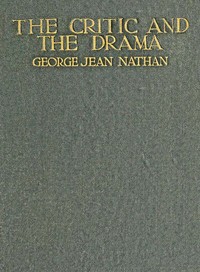
The Critic and the Drama by George Jean Nathan
George Jean Nathan was one of the most famous—and famously prickly—theater critics of his time. In The Critic and the Drama, he turns his sharp eye on his own profession. The book is less a single story and more a collection of forceful arguments about what's wrong with how people talk and write about plays. Nathan believed criticism had become dull, academic, and disconnected from the actual experience of watching a show. He takes aim at critics who prioritize obscure symbolism over emotional truth, and those who judge a play based on rigid moral or political standards rather than its theatrical power.
Why You Should Read It
Here's the thing: this book is over a century old, but it feels weirdly current. Swap 'theater' for 'film,' 'TV,' or even 'video games,' and Nathan's complaints still ring true. Have you ever read a review that seemed more interested in the critic's cleverness than in telling you if you'd enjoy the thing? Nathan was fighting that battle in 1922.
What I love is his fiery belief that criticism matters. He doesn't want to destroy it; he wants to make it better—more honest, more passionate, and more useful. He argues for the critic's right to have a strong, personal opinion. His writing is confident, sometimes arrogant, but always engaging. You get the sense of a man who genuinely loves the theater and is furious at the people making it seem boring.
Final Verdict
This isn't a light beach read, but it's far from a dry textbook. It's perfect for anyone who loves the arts and has ever been frustrated by the way we analyze them. Theater fans will get a fascinating look behind the curtain of a bygone era. Aspiring writers or critics will find a masterclass in having a clear, uncompromising point of view. Most of all, it's for readers who enjoy a good, smart argument. You don't have to agree with every point Nathan makes (I certainly didn't), but you'll have a great time thinking about why. It's a classic piece of cultural commentary that still has teeth.
This publication is available for unrestricted use. Feel free to use it for personal or commercial purposes.
Richard Wilson
8 months agoThis was exactly the kind of deep dive I was searching for, the historical context mentioned in the early chapters is quite enlightening. I'm glad I chose this over the other alternatives.
Richard Williams
2 months agoI've been looking for a reliable source on this topic, and the author clearly has a deep mastery of the subject matter. A perfect balance of theory and practical advice.
Kimberly Brown
5 months agoThis is an essential addition to any academic digital library.
Emily Jones
11 months agoAs a professional in this niche, the author’s unique perspective adds a fresh layer to the discussion. This exceeded my expectations in almost every way.



Elizabeth Wilson
1 month agoI've gone through the entire material twice now, and the logic behind each conclusion is easy to follow and verify. Top-tier content that deserves more recognition.