
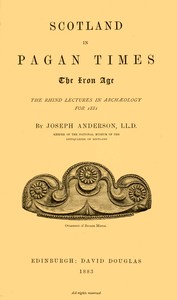
Scotland in Pagan Times; The Iron Age by Joseph Anderson
So, what's this book actually about? "Scotland in Pagan Times; The Iron Age" isn't a novel with a plot. Think of it as a guided tour through a thousand years of forgotten history. Joseph Anderson, writing in the late 1800s, acts as our guide. He takes us from the end of the Bronze Age right up to the point where Roman legions and early Christian missionaries began to change everything.
The Story
The 'story' here is the story of discovery. Anderson walks us through the physical evidence: the brochs (those cool, ancient Scottish tower houses), the crannogs (homes built on artificial islands), the intricate Celtic metalwork, and the weapons found in peat bogs. He shows how each artifact—a pot, a bracelet, a spearhead—is a piece of a larger puzzle. By examining where things were found and how they were made, he paints a picture of daily life, social structure, trade, and warfare. He also tackles the big, spiritual questions, exploring what little we can guess about their religions and rituals from sites like standing stones and burial cairns.
Why You Should Read It
First, it’s fascinating to see how historical detective work is done. Anderson’s excitement is contagious. You feel like you're right there with him, brushing dirt off a newly found artifact and asking, 'What does this tell us?' Second, it completely reshapes your understanding of Scotland. This book digs into the foundation layers of Scottish identity. It connects the landscape you might see today—a lonely hillfort, a standing stone in a field—with the vibrant, complex society that once thrived there. It’s a powerful reminder that history isn't just about kings and battles; it's about how ordinary people built homes, made art, and understood their place in the world.
Final Verdict
This is a perfect read for anyone with a budding interest in archaeology, Scottish history, or ancient cultures. It’s especially great if you've visited Scotland and felt the pull of its ancient sites. Be warned, it's an older book (from the 1880s), so some of the science is outdated, but that's part of the charm—it's a snapshot of how Victorians understood the past. If you want a dry, purely factual textbook, look elsewhere. But if you want an engaging, thoughtful, and passionate reconstruction of a lost world, led by a knowledgeable and enthusiastic guide, Joseph Anderson’s classic is still a fantastic journey.
This title is part of the public domain archive. Knowledge should be free and accessible.
Betty Davis
1 year agoWithout a doubt, the storytelling feels authentic and emotionally grounded. A true masterpiece.
Barbara Young
1 year agoI stumbled upon this title and the character development leaves a lasting impact. One of the best books I've read this year.
Patricia Harris
9 months agoHaving read this twice, the pacing is just right, keeping you engaged. Absolutely essential reading.
Ethan Hill
1 year agoLoved it.
Amanda Martinez
2 years agoFast paced, good book.