
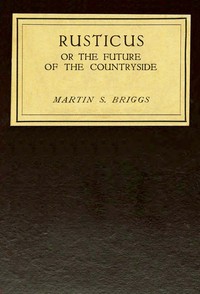
Rusticus : or, The future of the countryside by Martin S. Briggs
Published in 1929, Rusticus is Martin S. Briggs's deeply personal forecast for rural England. Briggs, an architect with a clear love for the land, watched as cars, buses, and electricity began to transform quiet villages. He saw a future where this 'progress' might not just change how people lived, but erase why certain places felt special. The book is his structured case for defense. He walks us through the elements that make the countryside unique: the local building styles using local stone, the winding lanes, the ancient hedgerows, and the slow pace of life shaped by the land itself.
The Story
There isn't a traditional plot with characters. Instead, Briggs builds his argument like a tour. He starts by painting a picture of the ideal, unspoiled English village—its harmony, its beauty rooted in practicality. Then, chapter by chapter, he examines the threats. He talks about the danger of new, cheap building materials that look the same everywhere. He worries about roads being straightened and widened for cars, destroying the gentle, old paths. He fears that as cities grow, they'll swallow up the distinct character of nearby towns. The whole book feels like a conversation with a very knowledgeable, slightly anxious friend who is pointing at things and saying, 'Look at this treasure. Now imagine if it was gone.'
Why You Should Read It
What grabbed me was the eerie relevance. Reading his warnings about 'standardized' housing and the loss of local crafts feels like reading today's headlines about chain stores and housing developments. It’s a powerful reminder that the debate about preserving community character is not new. Briggs isn't a grumpy anti-technology critic; he acknowledges the benefits of things like better sanitation. His concern is for balance. He asks us to think about what we value and what we're willing to lose for convenience. It made me look at my own surroundings—the old farmhouse down the road, the main street with its mix of shops—and wonder what Briggs would have thought of them.
Final Verdict
This is a perfect read for anyone who loves history, architecture, or simply feels a pull toward the countryside. It's for the person who drives through a village and wonders about its story. While some of the specific predictions are dated (it's fun to see what he got wrong!), the core questions are timeless. If you've ever felt sad seeing a field turned into a parking lot, or a unique local shop close down, Briggs gives voice to that feeling from nearly a century ago. It's a quiet, thoughtful, and surprisingly urgent little book.
This text is dedicated to the public domain. You are welcome to share this with anyone.
Linda Martinez
1 year agoI decided to give this a try based on a colleague's recommendation, the narrative arc keeps the reader engaged while delivering factual content. This adds significant depth to my understanding of the field.
Susan Brown
5 months agoExactly what I was looking for, thanks!
Thomas Jackson
2 years agoMy first impression was quite positive because the practical checklists included are a great touch for real-world use. This is a solid reference for both beginners and experts.
David Martin
1 month agoAs a long-time follower of this subject matter, the author manages to bridge the gap between theory and practice effectively. A solid investment for anyone's personal development.


Emily Moore
2 months agoI started reading this with a critical mind, the cross-referencing of different chapters makes it a great study tool. Highly recommended for those seeking credible information.