
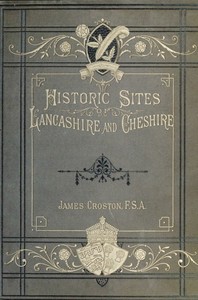
Historic Sites of Lancashire and Cheshire by James Croston
Let's be clear from the start: this is not a novel. There's no single plot or main character. Instead, James Croston, writing in the late 1800s, acts as your guide on a grand tour of two of England's most historically rich counties. He structures his journey by place, visiting towns, villages, castles, abbeys, and country houses. For each location, he pieces together its story from its founding to his own day, mixing architectural description with folklore, documented events, and the tales of local people he met.
The Story
The 'story' is the collective biography of Lancashire and Cheshire. One chapter might follow the rise and dramatic fall of a great family at their ancestral hall, like the Stanleys at Lathom House. The next might trace the slow, centuries-long growth of a market town. He takes you to the stark ruins of Whalley Abbey and explains not just who built it, but why it fell. He stands in the courtroom at Lancaster Castle and recounts the famous trials that happened there. He finds the small, touching details—a peculiar carving in a church, a strange local custom—and uses them as a doorway into the past. The narrative thread is the land itself, and the people who shaped it, fought over it, worshipped on it, and built their lives upon it.
Why You Should Read It
What makes this old book so special is Croston's voice. He wasn't a stuffy academic writing from a distant library; he was a man with muddy boots, knocking on doors and asking questions. You can feel his excitement when he discovers a forgotten inscription or a veteran who remembers the old ways. He has strong opinions—he'll call a modern renovation 'a disgrace' or praise a scenic view as 'sublime.' This personal touch transforms a guidebook into a conversation with a deeply knowledgeable, slightly opinionated, and endlessly curious friend. He makes history feel immediate and connected, showing how the grand events of kings and wars trickled down to change everyday life in these specific streets and fields.
Final Verdict
This book is a perfect match for anyone with a spark of local curiosity. It's for the walker who wonders about the old mill by the river, the driver who passes a castle every day, or the resident who wants to know what their town was like 300 years ago. It's also a fantastic resource for amateur historians and genealogists with roots in the region. Just be ready for its age—some attitudes and language are of its time, and our historical knowledge has advanced since 1882. But that's part of its charm. Reading Croston is time-travel twice over: first to the Victorian era, and then, through his eyes, back to the Middle Ages and beyond. Keep a map handy; you'll want to go see these places for yourself.
You are viewing a work that belongs to the global public domain. Feel free to use it for personal or commercial purposes.
Margaret Jackson
1 year agoI came across this while browsing and it provides a comprehensive overview perfect for everyone. Thanks for sharing this review.
Anthony Jackson
9 months agoA bit long but worth it.





Patricia Robinson
10 months agoBased on the summary, I decided to read it and the depth of research presented here is truly commendable. Exactly what I needed.